
Checking for a Warrant in Jacksonville
Start with Jacksonville District Court for any city case. Call 501-982-9531 or write DistrictCourt@cityofjacksonville.net. Have the full name, date of birth, citation or docket number, and the likely court event ready. Search ARCourts may show a public case, though it cannot fully confirm a Jacksonville warrant.
- Search the public Search ARCourts portal for the filing court and case.
- Contact Jacksonville District Court and ask for the current warrant status.
- Confirm whether the city’s surrender procedure applies to that exact warrant.
- Ask what identification, fee, court date, bond, or paperwork is required.
- For an outside warrant, contact its originating agency rather than Jacksonville Police.
A name match means little without the court and date. A blank online result does not prove Jacksonville clearance.
Jacksonville Publishes a Surrender Window
The official Jacksonville warrant FAQ spells out the city's own steps. It allows surrender on weekdays from 8:00 to 8:30 a.m. at the Jacksonville Court Building, 1412 W Main. Enter through the back door into the holding area. Tell staff about the active warrant and ask to see the judge.
Confirm before going. The published procedure is for Jacksonville warrants and may involve custody; ask the court or a lawyer whether it applies to the current record.
The FAQ requires a $25 warrant fee before release and advises bringing correct change. That is not a countywide fee, a bond schedule, or a release promise. The official FAQ documents only the Jacksonville route.
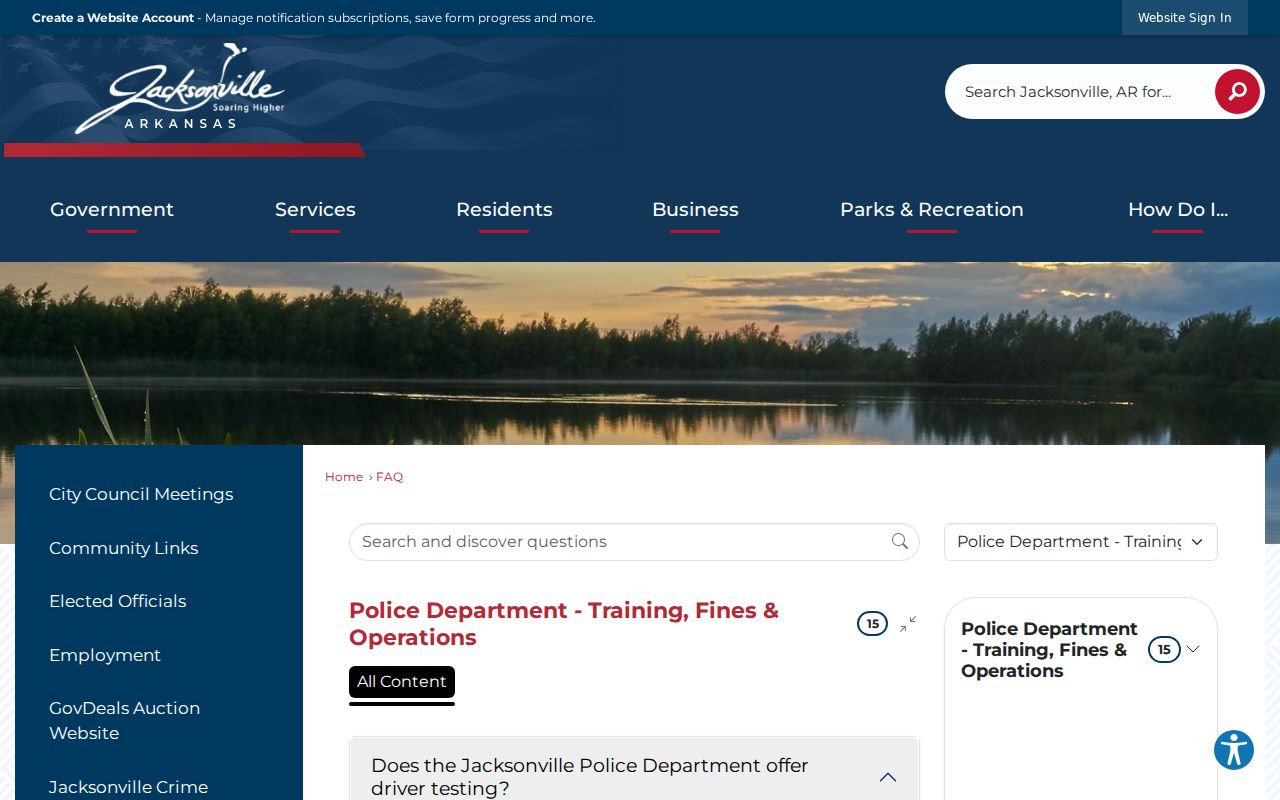
It covers Jacksonville alone, not other Pulaski County courts.
Jacksonville Police and Municipal Court
Jacksonville District Court keeps the city docket, while Jacksonville Police Department keeps its own agency records and serves the city process assigned to it. Under JPD policy, the department tracks warrants from Jacksonville District Court in its Records Management System. The two records overlap. They are not one file.
Jacksonville District Court
1412 W Main is the court building; 1400 W Main appears for office and mailing functions.
501-982-9531
DistrictCourt@cityofjacksonville.net
Jacksonville Police
Maintains Jacksonville warrants in its own RMS and confirms its own local process.
Outside-agency warrants route back to the issuer.
The official court directory should be checked for current office details.
Jacksonville Uses Two Main Addresses
The court building at 1412 W Main is the address named in the morning surrender instruction. For office or mailing contact, the city directory lists 1400 W Main. Keep the two straight. Mailing a clerk a question and walking into a holding area are different acts, even at addresses this close. The directory image comes from the official city source.
A Jacksonville resident can route a clerk question correctly before any in-person step. Call first, since entrances, addresses, and hours can change.
Jacksonville Warrant Types
A Jacksonville warrant can follow a missed court date, unpaid obligations, a criminal court order, or other process, and the court's exact wording controls. A bench or FTA warrant often follows a missed setting. An arrest warrant authorizes custody. A search warrant targets evidence, not a person's arrest.
| Type | Cause or purpose | Primary route |
|---|---|---|
| Bench or FTA warrant | Missed Jacksonville court date | District Court |
| Failure-to-pay process | Unpaid court amount | Clerk before payment |
| Arrest warrant | Judge-authorized criminal process | Court and JPD if locally issued |
| Outside-agency warrant | Issued beyond Jacksonville | Originating agency |
A warrant records an order or process event.
JPD Tracks Jacksonville Warrants Locally
Jacksonville Police policy lists the warrant-record fields its system can hold without exposing personal data. The RMS may capture the date and time received, whether the matter is civil or criminal, the document's nature and source, the parties and their roles, the assigned officer, the assignment date, the docket number, and the service-due date. That operational record lets officers pull the hard copy and verify identifying details on a locally issued misdemeanor warrant. A public court docket may show related events. It still does not replace the police service record. So ask the court about the order itself and JPD about execution or return.
Local record flow: Jacksonville District Court process › JPD RMS entry › officer assignment › service or return › court event
Inside a Jacksonville Warrant Record
Jacksonville's policy allows a fuller field inventory than most city sources offer. The docket number links the agency record to the court. Assignment and service fields reveal the police workflow. A token like JAX-DC-2025-#### shows why an identifier matters, though it is not the official local format.
| Docket number | Links the warrant to Jacksonville District Court. |
|---|---|
| Document nature | Identifies the process type and civil or criminal category. |
| Source | Shows which court or agency delivered the process. |
| Officer assignment | Tracks responsibility and assignment date. |
| Service due date | Supports agency workflow, not a promise to the public. |
| Return | Records service, arrest details, and the filing back to court. |
Public access may omit personal or restricted fields, so ask only for what the record requires.
Jacksonville Will Not Confirm Other Warrants
JPD policy draws a hard line. The department does not enter, maintain, or confirm another agency's warrants. An outside NCIC hit must be confirmed by the originating agency. That keeps a local records worker from certifying a Jacksonville file owned elsewhere.
Originating-agency rule: Jacksonville confirms locally issued records; an external warrant must be verified with the court or agency that entered it.
So the real question is not just whether a name appears. Ask who issued the warrant. Then contact that office about status, bond, surrender, and recall. Restricted NCIC data is never a public self-service search.
How Jacksonville Warrants Fit the County System
Jacksonville owns its city court records even when someone served on a warrant ends up at the Pulaski County Regional Detention Facility. County custody does not convert a Jacksonville docket into a county case. PCSO Records/Warrants handles sheriff-held questions, while the city clerk controls the Jacksonville case. The Pulaski County warrant records overview maps the wider routes.
Warrant flow: Jacksonville District Court / JPD › Pulaski County Sheriff or detention › restricted ACIC/NCIC confirmation
Jacksonville's 2024 unified emergency dispatch arrangement links JPD, fire, PCSO, and volunteer departments for communications. It does not merge their record custody.
Jacksonville Dispatch and Record Custody
Jacksonville turned its Emergency Communications Center into one dispatch hub on September 18, 2024. JPD, JFD, PCSO, and 17 volunteer fire departments share the line. That setup moves calls between agencies fast. It gives no Jacksonville office power to alter or confirm another office's warrant. A caller on the shared channel should pin down two things. Which agency owns the warrant? Which court owns the docket? Emergency dispatch handles emergencies, not public case searches. For a nonurgent record question, use the clerk email or the main court phone. Note: Jacksonville emergency lines are for an immediate safety need only, never for testing a warrant rumor.
Jacksonville Payment Before Warrant Service
Jacksonville appears on the official Arkansas ePay participating-court list. The state form asks for a court, a first and last name, and either a citation number or a driver's-license or state-ID number with date of birth. That route pays a citation. It is not a warrant roster. The state warns that payment can act as a guilty or no-contest plea and a waiver of trial. If a warrant already exists, call Jacksonville District Court. Ask whether payment is allowed and whether it recalls the warrant. Jacksonville also publishes a $25 warrant fee inside its stated surrender process. Do not mix that fee with the citation balance, the service charge, or bond. Payment and surrender answer different pieces of the matter. Before picking one, ask three things. Must the warrant be served, must a judge set the next date, and can the citation itself be paid? Confirm accepted payment methods and the exact amount with the Jacksonville court. The FAQ's correct-change instruction covers its stated warrant fee, while the state payment site carries separate card and service-charge terms. Keep each receipt, and keep the new court date too.
Jacksonville Warrant Return Process
After service in Jacksonville, the officer completes a return and an Arrest Disposition Report under city policy. The return can list the county of arrest, the date and time, the court appearance date, the officer's signature, and related disposition details. That closes the service loop. It does not always close the case.
- Return of service
- The officer’s record of how and when process was served.
- Served
- Execution of the warrant; further court action can remain.
- Recalled
- Court withdrawal of the warrant.
- Originating agency
- The office that owns and confirms the warrant entry.
- Hold
- A separate court or agency restriction affecting release.
Ask the clerk whether the return has been filed and what court event comes next. Transport to the Pulaski County Regional Detention Facility changes custody. The jail liaison may hold custody and appearance details. Jacksonville District Court still controls its city docket. Match the dates on the return, the jail event, and the new setting, since no single screen settles a lag on its own.
Jacksonville Warrant Confirmation Sequence
Jacksonville policy requires local misdemeanor confirmation through its own records. That means locating the hard copy and checking the identifying information. An external NCIC hit works differently. There, the originating agency must respond. This two-track process is why one call to JPD cannot settle every Jacksonville warrant bearing a similar name. For a local record, give the court docket number and ask the Jacksonville clerk for status before trusting an agency result. For an external one, note the issuer and contact that agency. Give no identifiers beyond what the official needs. The aim is a current answer and a valid next step, not a copied name list. Write down the confirming agency, the contact date, and any new court setting.
Jacksonville Warrant Records and Public Access
The Arkansas Freedom of Information Act opens qualifying public city records, with exemptions. Administrative Order 19 limits online court access. Juvenile, sealed, protected, and investigative material may be off limits. A Jacksonville request should name Jacksonville District Court or JPD, the date range, the document type, and any known docket number.
Key access rules:
Arkansas Freedom of Information Act provides a route to identifiable public records held by a city agency.
Administrative Order 19 governs public access to Arkansas court files.
ACIC guidance confirms that ACIC and NCIC are restricted criminal-justice systems.
Jacksonville publishes no warrant-specific online roster or public API. If part of a record is withheld, ask for the nonexempt portions.