
Pulaski County Arrest Warrants Explained
An arrest warrant commands an arrest. Arkansas courts treat it as one tool among several. A judge can order a warrant instead of a summons, or direct a surety to appear, and the choice shapes what happens next. The judicial officer issues the order, the clerk records it, and a sheriff or police agency serves it and files the return. In Pulaski County, circuit-level criminal cases run through the Circuit Court of the Sixth Judicial Circuit. District courts handle misdemeanors and early felony steps. The Arkansas Judiciary forms catalog publishes the arrest-warrant order used with Rule 9.5 materials, which is what that official catalog shows.
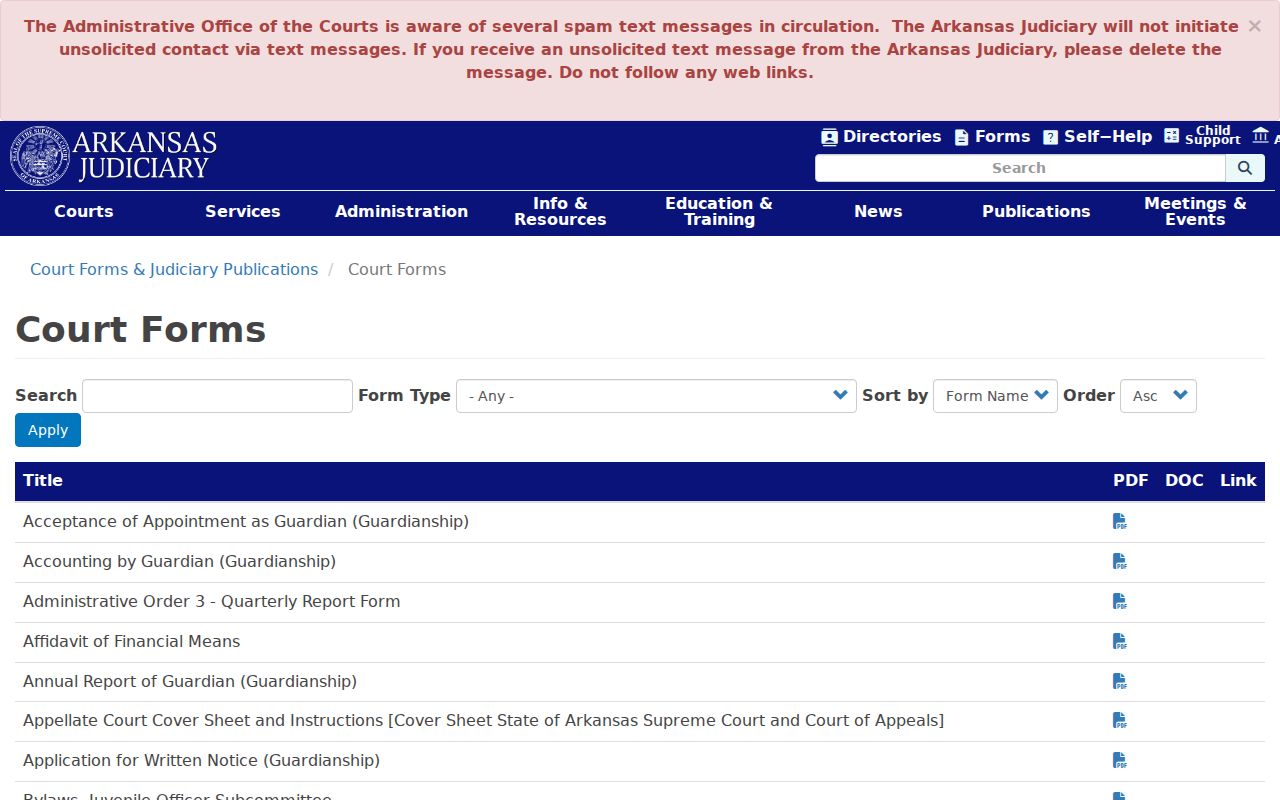
The catalog covers statewide court forms. A Pulaski County docket may still list events while a signed or restricted record stays sealed from view.
Pulaski County Arrest Warrant Probable-Cause Records
Sworn papers drive the process. A complaint, an affidavit, or an indictment can all support court action, depending on the matter. For a warrant records search, the key questions are which Pulaski County court ordered the arrest and which filing is open to the public. Some things stay hidden. Sealed filings, juvenile matters, and records restricted by court rules may not show up in public results. Use Search ARCourts to find a participating public case by participant or case description, then confirm the court, filing date, charge, and person with the clerk. That portal is not a probable-cause review, and it does not tap ACIC or NCIC or list every active Pulaski County arrest warrant. For a fee, the Arkansas Criminal History portal offers a separate public criminal-history route.
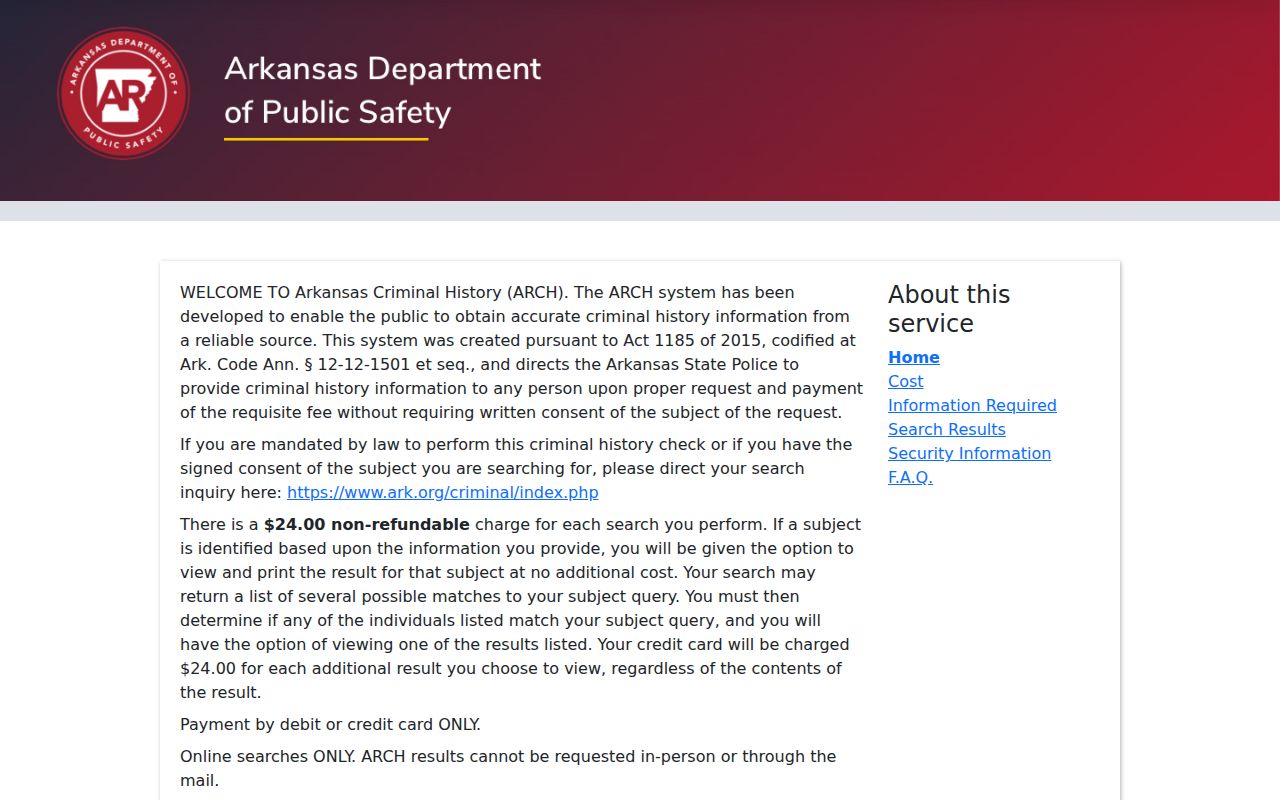
Treat ARCH as a history tool. It is not a current Pulaski County arrest warrant search or confirmation service. Note: A missing online filing does not prove that Pulaski County arrest process was never issued or later recalled.
Inside a Pulaski County Arrest Warrant
A warrant and its docket can carry several identifiers. Read them together: court, division, case number, warrant type, issue date, and status. Pulaski County systems may assign separate case and warrant numbers, so quote each one exactly when you ask for a record.
| Record identifiers | A warrant number and separate case number, copied exactly, such as court-issued identifier. |
|---|---|
| Person and allegation | The named subject, charge or offense, and case type. These entries do not prove guilt. |
| Court authority | The issuing court or division, judge, clerk direction, command to arrest, and issue date. |
| Release terms | Any bond amount, bond type, surety direction, commitment, or hold shown. |
| Service and return | Arresting county, service date and time, officer, return, and filing date. |
| Current status | Active, recalled, served, quashed, stayed, transferred, or another custodian-specific status. |
Jacksonville Arrest Warrant Boundaries in Pulaski County
Jacksonville Police policy shows why the originating agency matters. JPD tracks Jacksonville District Court warrants in its Records Management System. Entries can include receipt time, civil or criminal type, source, parties and roles, assigned officer, docket number, assignment date, and service-due date. That is one city's bookkeeping, not a countywide file. The policy states plainly that Jacksonville does not maintain or confirm another agency's warrants. Staff confirm a local misdemeanor warrant from the hard copy and identifying details. An external NCIC hit goes back to the originating agency for confirmation. Shared communications do not make every city desk the custodian of every Pulaski County arrest warrant.
Serving Arrest Warrants in Pulaski County
Sheriff's deputies and city police serve arrest process within their authority. The PCSO enforcement overview explains that communications staff can query ACIC and NCIC, verify arrest warrants, and enter or delete served warrants. Those are restricted criminal-justice tasks, not a public search. After service, the agency documents the event and the matter returns to court. A return may list the county, arrest date and time, appearance date, officer signature, and disposition paperwork. Booking, bond, holds, and the next appearance all depend on the order. PCSO's Judicial Division processes cash bonds from the detention facility. Even so, not every Pulaski County warrant allows cash release.
Pulaski County Arrest Warrant Confirmation Routes
PCSO posts no public arrest-warrant roster. A careful Pulaski County arrest warrant search therefore runs through official routes that answer different questions.
- Search the public docket through Search ARCourts to identify a likely court and case. Treat the result as a lead, not final status.
- Call the issuing clerk. Circuit questions can start at 501-340-8500; county district criminal questions route through 501-340-6845.
- Ask PCSO Records/Warrants at 501-340-6625 or the originating city agency to confirm its agency record. The public cannot query ACIC or NCIC.
- Request an existing sheriff record or policy through the PCSO FOIA portal.
Comparing Arrest, Summons, and Bench Warrants
These instruments demand different responses. A Pulaski County arrest warrant authorizes custody on the spot. A summons directs an appearance without an initial arrest. A bench warrant usually follows nonappearance or noncompliance, and the docket controls the exact label.
| Feature | Arrest warrant | Summons | Bench warrant |
|---|---|---|---|
| Order | Take the named person into custody. | Appear as directed. | Bring the person before court after a missed duty. |
| Basis | Court-approved process tied to an alleged offense. | A matter handled without initial custody. | Failure to appear, pay, comply, or another order. |
| Source | Issuing court and originating agency. | Court docket and notice. | The court whose setting was missed. |
| Response | Confirm, seek counsel, and arrange surrender or bond. | Appear by the deadline. | Ask about appearance, recall, payment, or motion. |
Pulaski County Arrest Warrant Status Terms
Similar status terms are not always interchangeable. The issuing clerk explains the court's label, while the serving agency addresses only its own entry and return.
- Active
- Not recalled, quashed, served, or otherwise closed, subject to confirmation.
- Recall
- The court withdraws the warrant. A case, payment, or license duty may remain.
- Return of service
- The officer's record of how and when process was served or not served.
- Hold
- A separate court or agency restriction affecting custody or release.
Save the recall order and every receipt. A stale warrant result cannot reflect a later Pulaski County court action.
If There Is an Arrest Warrant for You
First confirm the issuing court, case number, warrant type, and current status. Then ask the practical questions. Is bond set? Does another hold affect release? Will the court permit a planned surrender, a counsel appearance, or a motion to recall or quash? An attorney can interpret the order and coordinate the steps without promising an outcome. County District Court publishes one specific route: report with photo ID to PCSO at 2900 S Woodrow on weekdays from 8:00 a.m. to 4:30 p.m., where the warrant is served and a new date is issued. Call 501-340-6930 for the service location or 501-340-6850 for clerk questions. City instructions in Pulaski County differ.
Important: Speak with a qualified attorney before appearing; an active warrant can lead to custody, and release terms are case-specific.
Pulaski County Arrest Record Access
Pulaski County arrest records sit with the agencies and courts that hold them, and the Arkansas Freedom of Information Act, Ark. Code §25-19-101 et seq., gives you a way to ask. A good written request names the agency or issuing court, the record type, the date range, and any known number. Ask for segregable nonexempt material. Request something that already exists, such as a log, a return, a record, or a policy. The law does not require an agency to build a new database or run a public ACIC/NCIC search for you. Two more limits matter here. Administrative Order 19 restricts what court data is public, and juvenile, sealed, expunged, protected, and open-investigation material may be off limits. Pulaski County publishes no universal copy fee or response time, so confirm both before ordering. The Pulaski County warrant records overview maps the court, clerk, and sheriff offices in the wider system.
Pulaski County Arrest Warrant Court Levels
Court level decides where a Pulaski County warrant question goes. The Circuit/County Clerk at 401 W Markham, Suite 100, handles circuit filings. County District Court sits at 3001 W Roosevelt. Pulaski County Circuit Court runs 17 divisions, so ask the filing division about a specific case rather than a generic office number. Federal matters follow a separate track entirely, and the U.S. District Court's Little Rock location page lists the federal courthouse and its clerk context.
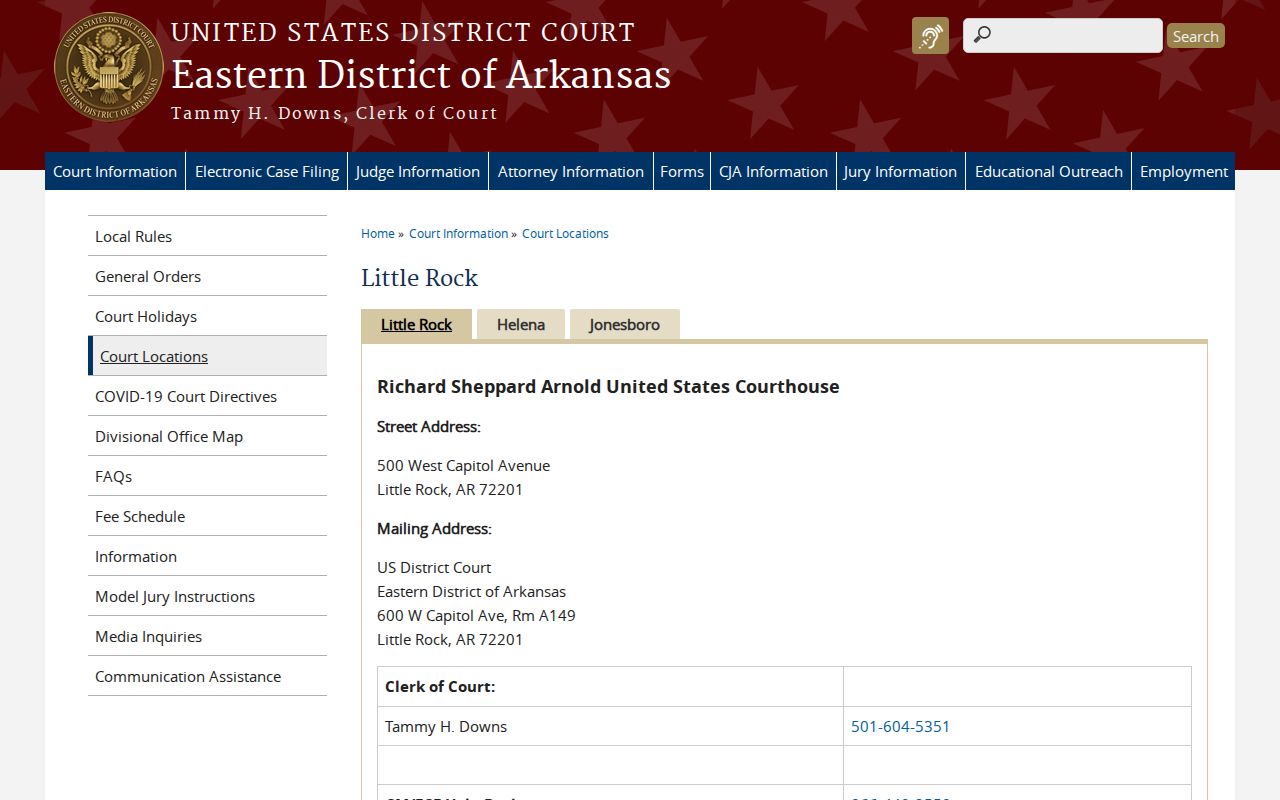
That federal page covers courthouse location and clerk details, not a public federal arrest-warrant list. For public federal docket access and what it costs, the official PACER pricing FAQ lays out the fees.
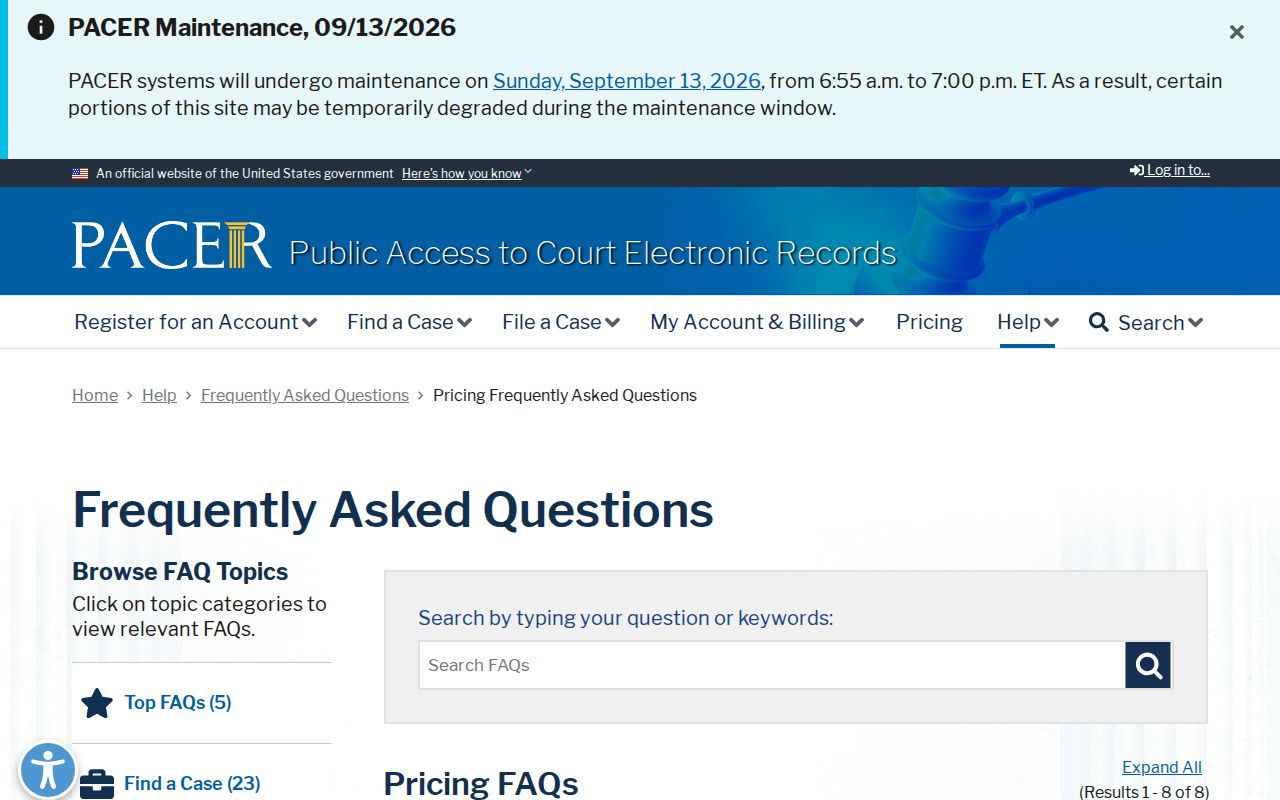
PACER opens dockets, not everything. Sealed warrants and law-enforcement information may stay out of view, so it is not a complete federal warrant search. The Pulaski County sheriff's Judicial Division serves process and guards courtrooms. It posts no public online arrest-warrant database. Knowing which office, city, county, or federal agency holds the record keeps a thin answer from being mistaken for clearance.
Pulaski County Arrest Returns Complete the Record
Serving a warrant is not the end of the paper trail. Jacksonville policy has the officer complete a warrant return plus an Arrest Disposition Report after local service. A return can show the arresting county, the date and time, the scheduled court appearance, and the officer's signature. The clerk then folds it into the case file and updates the record. When you request Pulaski County arrest warrant records, ask for four things separately: the issuing order, public docket events, the agency's service return, and the current court status, assuming each is nonexempt. One document rarely answers all four. A hard-copy warrant held by an agency can need different confirmation than a portal entry. The detention facility adds another layer. Its Court Liaison works with more than 30 district, circuit, and federal courts. That volume explains why one booking can touch several courts without the detention office ever being the issuing authority. Ask which court owns each hold. Ask which clerk can confirm the next required appearance. Tie every answer to its agency and date as you go, and keep the Pulaski County pieces straight by office.